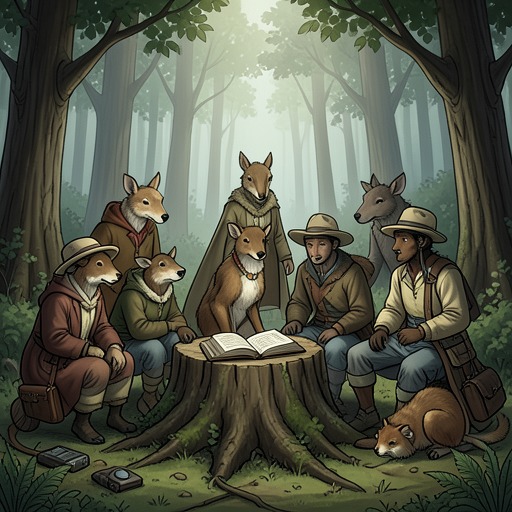
“The thing about stories is that you have to pick the ones that last”
The Amazing Maurice and His Educated Rodents“The thing about stories is that you have to pick the ones that last” turns the novel’s closing reflection into a principle of both judgment and survival. The line acknowledges that a story’s apparent success does not mean it has changed everyone; its lasting force lies in the possibility that some people will carry its version of the world forward.
Selection and Persistence
The expression follows the account of a town that celebrates its arrangement with the rats. Visitors hear about the Rat Tax, the rats’ town beneath the human one, their access to the library, and the young rats who sometimes attend school. The arrangement is admired as orderly and remarkable, but admiration alone does not remake conduct: most visitors return home and resume setting traps and laying poison. The distinction is not between a perfect story and a flawed one, but between a story that merely impresses and one that lasts long enough to alter how someone sees the world.
The narrator makes that limitation explicit: some minds cannot be changed by force, while a few people nevertheless come to see things differently. Against the visitors’ praise of an ideal system, the closing judgment is practical rather than triumphant: “It's not perfect, but it works.” Choosing stories that last means accepting that their influence may be partial, without mistaking incompleteness for failure.
The Ending’s Reprise
The phrase gains further force from the final scene. Far downstream, a cat enters a prosperous town, watches its people, and follows a young boy carrying his worldly belongings in a knotted handkerchief. The cat recognizes that knowing people’s dreams makes them easier to handle, then addresses the boy with the promise of becoming Lord Mayor. The scene returns storytelling to action: familiar story-patterns can be used to recruit someone into a new adventure, not merely admired as tales about other lives.
The next line revises the expression into a more urgent refrain: “some stories end, but old stories go on, and you gotta dance to the music if you want to stay ahead.” The Rat Piper’s music and the rats’ dancing, introduced in the closing account of the town, thus echo into the book’s last image of a cat beginning another story. The ending does not claim that every lesson survives or that every listener changes. It leaves the reader with recurrence instead: stories can end, continue, and be put to work again, so choosing which ones endure matters.